
Torch-Down Roofing Systems
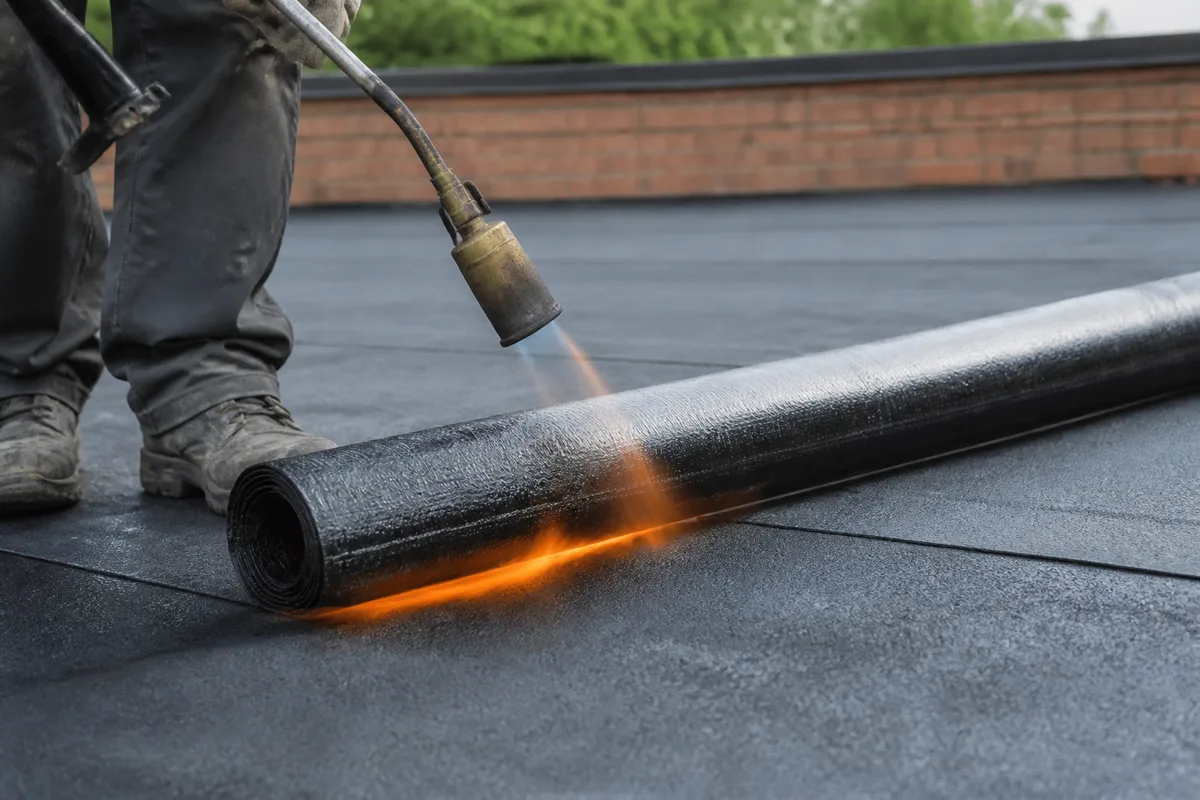
Torch-Down Roofing Systems
Torch-down roofing uses heat to fuse layers of modified bitumen into one continuous, watertight membrane. It's a common choice for flat and low-slope roofs that see regular foot traffic, rooftop equipment, or heavy weather exposure, since the fused seams resist tearing and separation better than adhesive-only systems.
Where Torch-Down Fits
- Heavy foot traffic areas — rooftop decks, mechanical walkways, and service paths benefit from the membrane's puncture resistance.
- Chicago weather swings — the fused layers hold up against freeze-thaw cycles, wind, and standing moisture.
- Multi-ply reinforcement — torch-down often works alongside modified bitumen APP layers for added tear resistance in multi-ply systems.
Supporting Work on the Same Roof
A torch-down installation is rarely a standalone task. Flashing and scupper systems are checked to keep water moving off the roof, and any pooling identified is addressed through tapered systems or re-sloping before it stresses the new membrane. Where roof edges or valleys are vulnerable to ice buildup, ice and water shield membrane is applied alongside the torch-down layers for added protection at the most exposed points of the roof.