
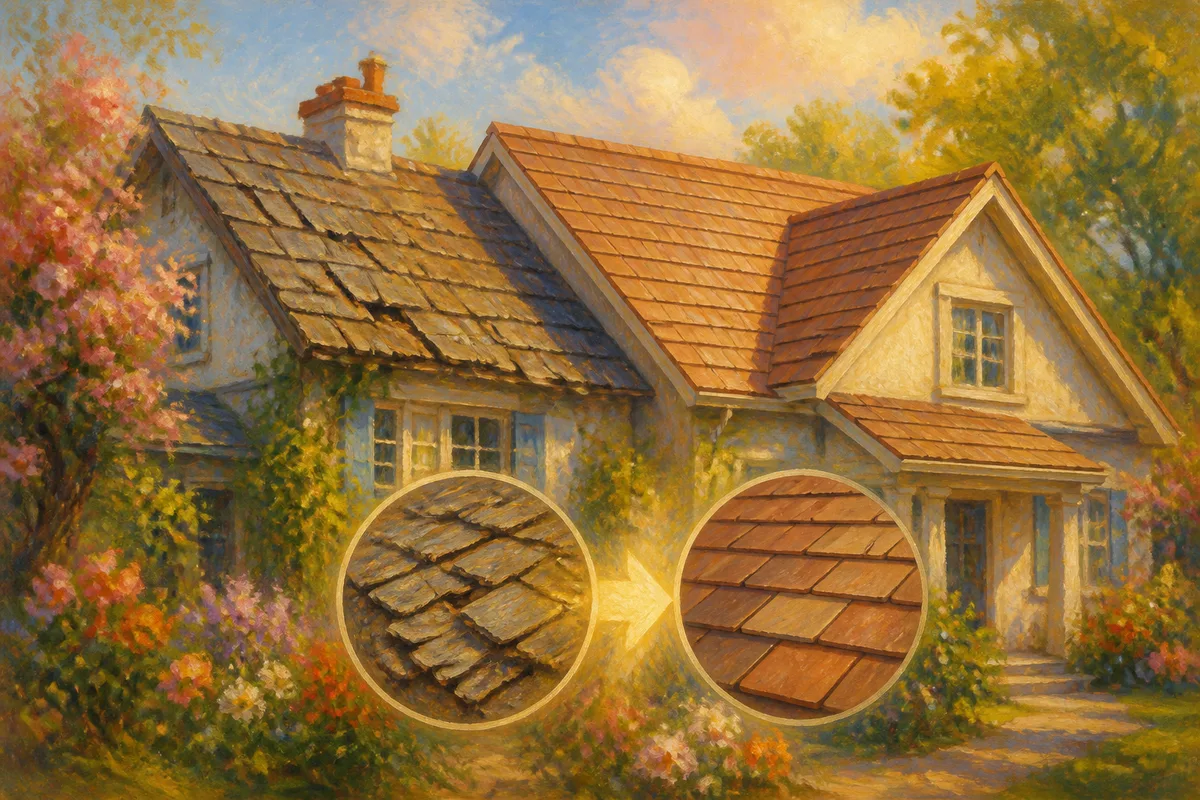
Roof Repair or Replacement? How Pros Decide
When something goes wrong with a roof, the first question most owners ask is simple: can this be fixed, or does the whole thing need to come off? It's a fair question, and the honest answer is that it depends on more than just what you can see from the ground or even from a ladder.
Roofing pros look at a handful of specific factors before making a call. None of these factors work alone. A roof with one small issue might still need full replacement because of what's underneath it, while a roof that looks rough on the surface might only need a targeted repair. Understanding the reasoning behind the decision helps owners ask better questions and feel more confident about whatever direction their roof ends up taking.
How Much of the Roof Is Actually Affected
The first thing a roofer checks is how widespread the problem is. A leak in one spot, a torn section of membrane, or a small area of ponding water often points to a repair. These are contained issues, and fixing them addresses the actual source of the trouble without disturbing the rest of the roof.
But sometimes what looks like a single leak is really a symptom of something bigger. If water is tracking under the surface and showing up in a different spot than where it's entering, that's a sign the membrane or flashing has broken down in more than one place. When damage keeps popping up in new areas even after repairs, that pattern usually means the roofing material itself is reaching the end of its useful life, and patching one section at a time stops making practical or financial sense.
How Old Is the Roof
Age matters, but not in isolation. A newer roof with a repair need is almost always worth fixing, since the rest of the material still has plenty of life left in it. An older roof is a different story. Once a roofing system is well past its expected service life, a repair might solve today's leak but leave the rest of the surface just as likely to fail again soon in a different spot.
This is where a straightforward conversation with a roofer helps. Ask directly how old the roof is estimated to be and what that means for the specific material it's made from. Different roofing systems age differently, and a contractor who inspects the roof in person can explain what stage of its life it's likely in and what that suggests about repair versus replacement.
How Many Layers Are Already There
This factor surprises a lot of owners. Many flat roofs have been recoated, patched, or partially rebuilt over the years, which means there can be several layers of material stacked on top of each other by the time a real problem shows up. Each added layer changes how the roof handles weight, drainage, and heat, and it also changes how well a new repair will bond to what's already there.
When a roof already has multiple layers, adding one more patch can sometimes trap moisture instead of solving the problem, especially around seams and edges. In these cases, a roofer may recommend removing the buildup and starting with a clean surface rather than continuing to add to it. This is also why a visual inspection alone doesn't always tell the full story. Sometimes it takes cutting a small test section to see exactly what's been layered on over time.
What the Deck and Structure Look Like Underneath
The roofing material is only part of the picture. Underneath it sits the deck, the solid layer that everything else is attached to. If water has been getting in for a while, that deck can soften, sag, or weaken in spots, even if the surface damage looks minor.
A repair on top of a compromised deck doesn't hold up the way it should. This is one of the main reasons roofers check for soft spots, sagging, or unusual flexing during an inspection, not just the surface itself. If the deck is sound, a repair is often the more sensible route. If it isn't, replacement usually becomes the more practical choice, since it allows the deck to be addressed at the same time as the roofing surface.
Weather events can also speed this decision along. Storm damage, wind-lifted flashing, or ice dam buildup can create sudden problems on a roof that was otherwise doing fine, and those situations often call for a closer look at both the surface and what's underneath it before deciding how to move forward.
Bringing the Factors Together
No single sign tells the whole story on its own. A roofer weighs the size of the damage, the age of the material, how many layers exist, and the condition of the deck together before recommending a direction. This is why two roofs with a similar-looking leak can end up with two completely different recommendations.
If you're staring at a stain on the ceiling or a soft spot on your flat roof and aren't sure which way this is going to go, that uncertainty is normal. The best next step is a direct conversation about your specific roof, its age, and its history. Feel free to call with questions about what you're seeing and what it might mean, so you can make a decision that fits your building rather than a general rule of thumb.
Questions about your own situation? The team at Chicago Flat Roofing Contractors is happy to help — call us at (773) 209-1468 or request an appointment.
This article is for general information only.