
Leak Detection
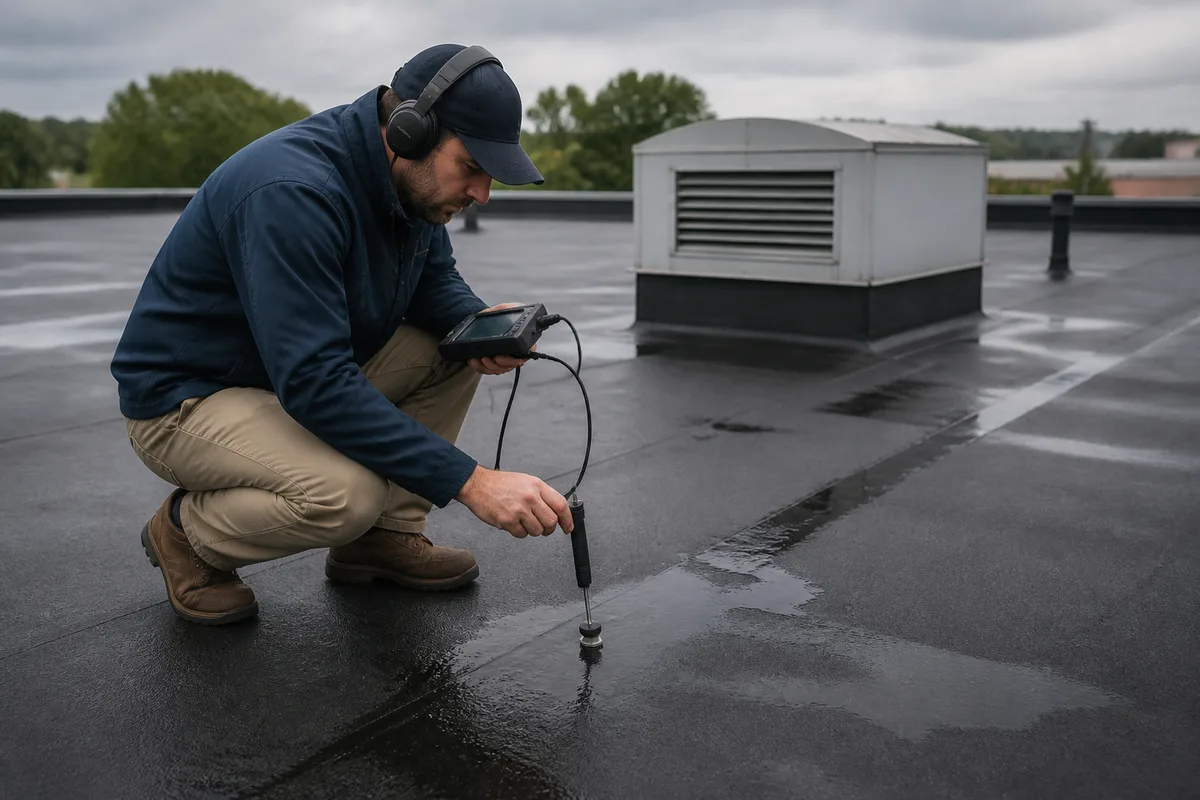
Leak Detection
A flat roof rarely announces a leak where the water actually enters. Moisture can travel along seams, decking, and insulation before it ever shows up as a ceiling stain, which is why tracing a leak back to its source calls for more than a visual walk-through. Chicago Flat Roofing Contractors uses targeted inspection methods to locate hidden entry points before they cause further damage to the membrane or structure below.
How We Locate a Leak
- Drone Roof Inspections — Aerial passes cover seams, flashing points, and drains across the whole roof without extra foot traffic.
- Infrared Roof Moisture Scanning — Infrared scanning reveals moisture trapped beneath the membrane, even where the surface looks dry.
- Flashing & Scupper Systems — Flashing, edges, and scuppers are checked closely, since seals in these areas are common places for water to work its way in.
Common Leak Sources on Flat Roofs
- Ponding water — Standing water that doesn't drain can stress seams and eventually find a way through the membrane.
- Ice dam intrusion — Chicago freeze-thaw cycles can push water beneath roof edges and valleys during winter months.
- Aging membrane and seams — Older or worn seams are frequent starting points for slow, hard-to-spot leaks.
After the Inspection
Findings can be paired with photo-documented reports, giving property owners a clear record of what was found and where, useful for planning repairs or supporting an insurance conversation.