
Cedar Shake Roof Installation
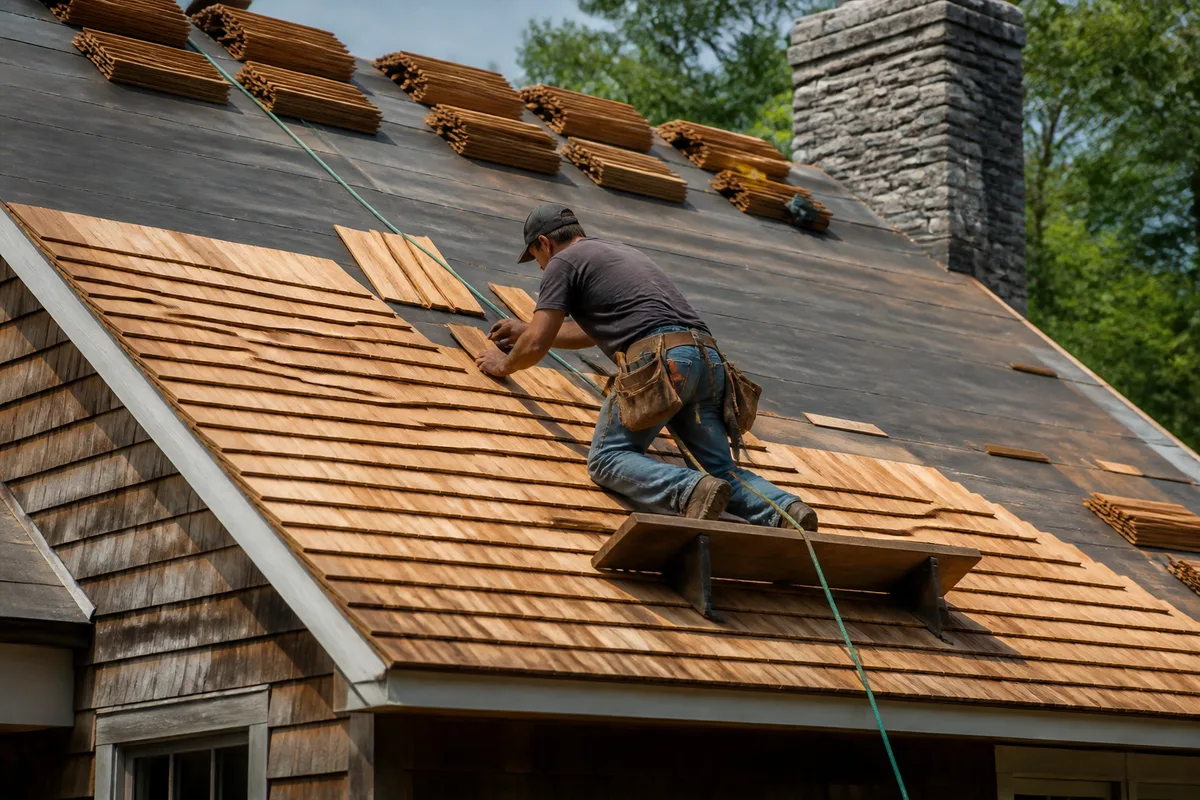
Cedar Shake Roof Installation
Cedar shake roofing brings a natural, textured look to a home while shedding rain and snow through overlapping wood courses. Property owners often choose cedar shake for its warm appearance and its ability to hold up through wide temperature swings, provided the edges, valleys, and penetrations are properly sealed against moisture. A cedar shake installation succeeds or fails on the details underneath the shakes as much as the shakes themselves.
What Goes Into a Cedar Shake Roof
- Ice & Water Shield Membrane — self-adhering membrane placed at eaves and valleys guards the vulnerable spots where ice dams tend to form in Chicago winters.
- Flashing & Scupper Systems — properly sealed flashing directs water away from chimneys, walls, and roof edges instead of letting it work its way under the shakes.
- Tuckpointing & Mortar Systems — where a cedar shake roof meets a chimney or parapet wall, sound mortar work keeps that joint watertight.
Inspection and Safety on the Roof
- Drone Roof Inspections — aerial inspection reviews seams and flashing points on a finished cedar shake roof without added foot traffic on the wood.
- Fall Protection Safety Harness Systems — OSHA-grade harness systems keep crews secured while working across the steep planes typical of shake roofing.
- Snow & Ice Removal Equipment — purpose-built equipment clears heavy snow loads from a cedar shake roof without damaging individual shakes.